



Summarise with AI:



The impact of recent AI advancements can be felt across every sector and almost every aspect of individuals. The way humans build digital products, think, and build strategy is now being reimagined by AI.
What we imagine today could not have been imagined without the cloud. Today, cloud is not a mere collection of data storage devices but a realm where the world's biggest mysterious technological innovations lie.
As businesses of all sizes embrace the cloud (even some may not realize it), the cloud acts as a silent force transforming our world. Cloud companies (like AWS, Microsoft Azure, Google Cloud, etc.) will earn $2 trillion from selling their cloud services, Goldman Sachs reports.
In this article, we bring together the most relevant cloud insights, adoption and cloud computing trends, and shifts that CEOs and business owners need to know as cloud and AI become core drivers to compete, thrive, and innovate.
Cloud Market Size & Spending
- The overall global cloud market is valued at around USD $1,100 billion in 2026. [1 | 2]
- By 2026, Over 94% of organizations will be using cloud in some form.
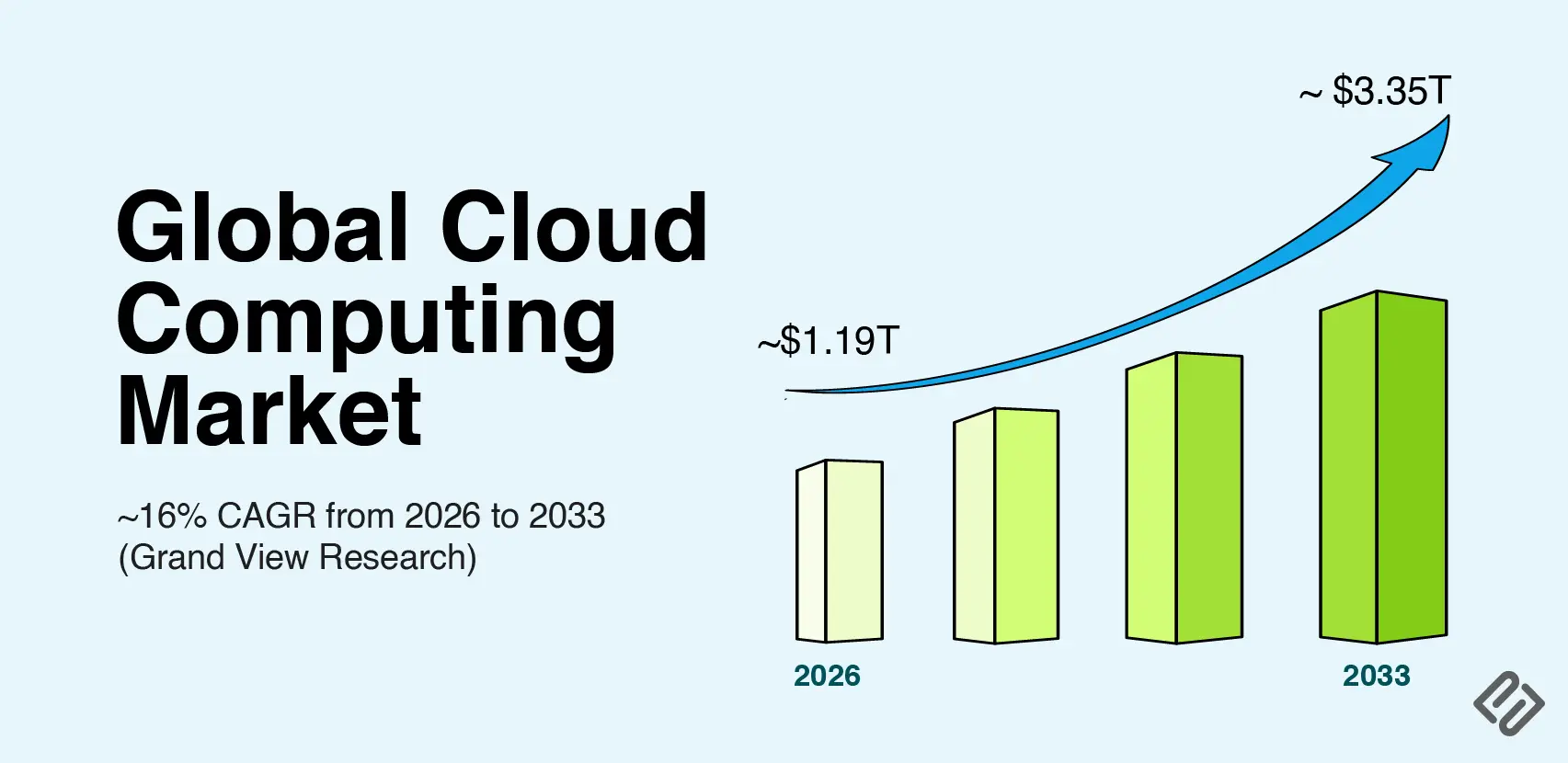
IT spending on public cloud services is set to break past $1 trillion in 2027. [Gartner]
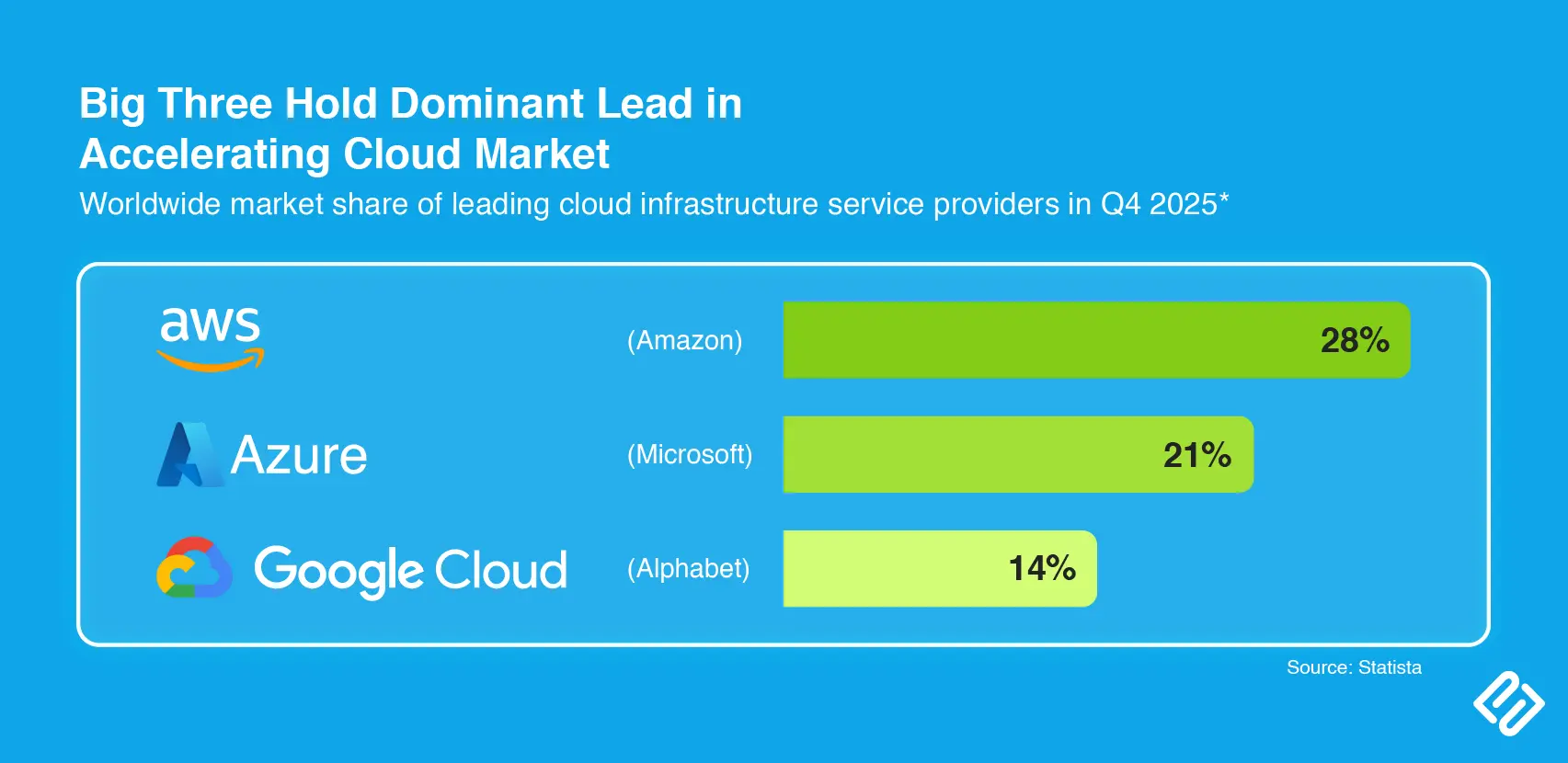
- In Q4 2025, the Big Three – AWS (28%), Azure (21%), Google Cloud (14%) – cloud providers captured 63% of the global market. [Statista]
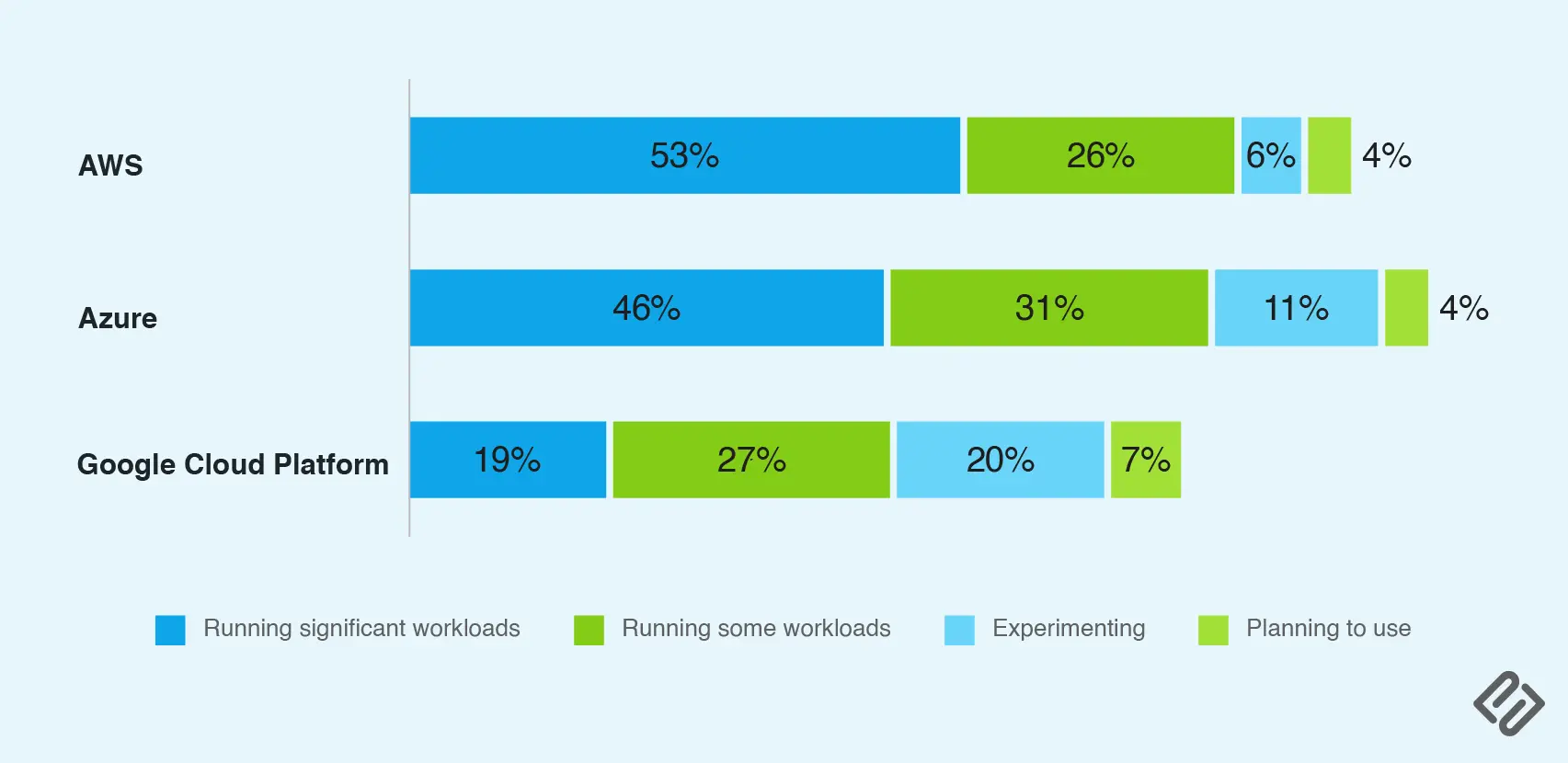
90% of organizations expected to use hybrid cloud by 2027. [Gartner]
- Cloud industry is growing 20–25% annually in the near term. It is expected to reach multi‑trillion‑dollar valuations by early 2030s.
- 96% of companies use the public cloud (2026).
- 70% of companies use hybrid cloud (at least one public and one private cloud). [Source]
- Public‑cloud spend still surging. Gartner reports $723.4B in worldwide public‑cloud end‑user spending in 2025 (up 21.5% YoY).
Cloud Adoption & Workload Shifts
- IDC finds 49% of production workloads still run on‑premises today.
- Over the next 3–5 years, more than two‑thirds of workloads will shift to the cloud. [Accenture]
- Private cloud will gain momentum alongside public‑cloud GenAI services. [Forrester]
AI & Cloud AI Adoption
Hybrid is the default for GenAI at scale. 90% of organizations will adopt a hybrid‑cloud approach by 2027, a trajectory tied directly to running AI/GenAI.
- IaaS/PaaS are growing fastest as enterprises modernize stacks to support GenAI training.
- PaaS is the fastest‑growing segment with 37%+ YoY growth, fueled by AI model training, hosting, and inference workloads. [Source]
- Cloud AI market is expected to grow at CAGR ~40.1%. [Source]
- 50% of cloud compute resources will be devoted to AI workloads by 2029, up from less than 10% today.
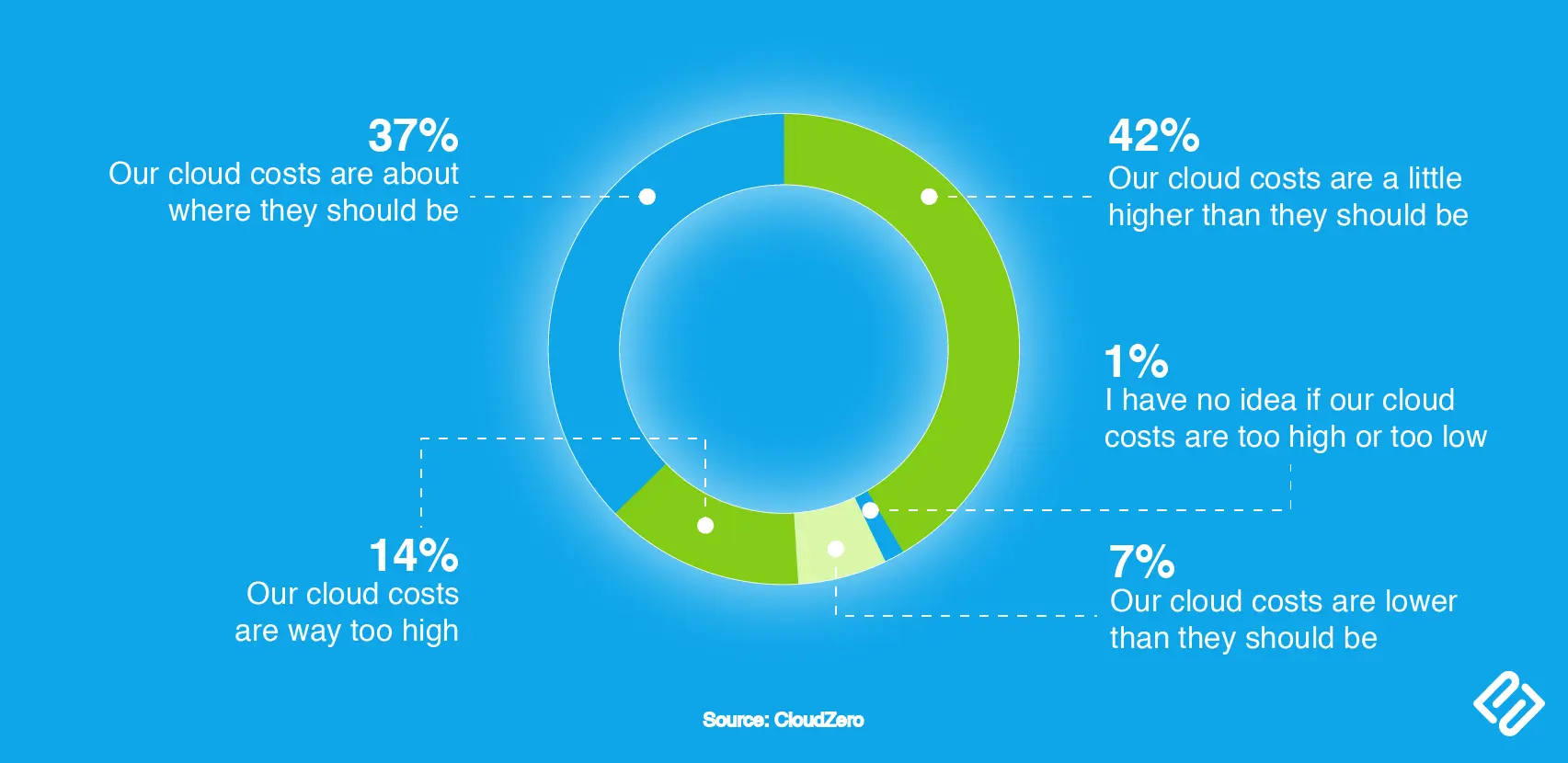
- AI is increasing cloud waste. About 29% of the money companies spend on cloud services is estimated to be wasted or unnecessarily spent, with AI and GenAI workloads being a major reason for the increase. [Flexera 2026 State of Cloud]
- Generative AI usage jumped from 50% to 58%, making it the third most widely used public cloud service. [Flexera/State of Cloud 2026]
AWS, Azure, Google Cloud are the primary choices for major AI-first companies running complex and heavy AI workloads. The public cloud is the default for AI workloads: a common reason behind the growing usage of public cloud.
Cloud Adoption & Usage Stats (2025–2026)
- 94% of enterprises worldwide use cloud services as of 2026.
- 72% of all workloads were cloud-hosted in 2025.
- Only 3% of enterprises have no cloud adoption plans.
- Hybrid cloud is used by 66% of global enterprises.
Cloud Migration Trends (2026)
More and more companies are moving their systems and data to the cloud. In 2026, the Cloud Migration Service market is worth about $11.84B.
- By 2033, it is expected to reach about $42.92 billion, growing at a 20.2% CAGR.
- In 2026, 45% of IT spending will shift from traditional systems to cloud. [Research and Markets - Market Research Reports]
Microsoft Azure Statistics 2026
- Azure surpassed $100 billion in annual revenue for the first time.[Microsoft FY26 Q4 Earnings].
- Microsoft 365 Copilot exceeded 30 million paid seats. This is one of the strongest enterprise AI adoption metrics publicly disclosed by any vendor.[Source/Microsoft]
- Microsoft Cloud revenue reached $59.3 billion in the quarter, up 27% YoY. [Source/Microsoft]
- Azure and other cloud services grew 43% year-over-year. That's exceptional growth at Azure's current scale.[Source/Microsoft]
- Microsoft Azure held 21% of the worldwide cloud infrastructure services market. [TechInsights/Synergy Research Group]
Cloud use has almost doubled in the last two years: in 2022, only about 1 in 4 application categories were in the cloud, and now it’s more than half.
At the same time, IT budgets are moving away from on‑prem servers, hardware, and old-school operations and flowing into AI, cloud platforms, security, and analytics. They are seen as the new growth engines for modern systems.
- 71% have a Cloud Center of Excellence (CCOE).
- 63% have dedicated FinOps teams.
Cloud is now the foundation for AI in the enterprise.
- By 2029, 50% of cloud compute will be AI‑driven. Leaders must plan budgets, infrastructure, and talent around this reality now.
- SaaS (Software-as-a-Service) makes up about 52%–56% of all the money/revenue generated in the cloud market. [ flexera | Synergy Research Group ]
- PaaS growing at 37%+ year-over-year is a pretty clear signal: companies are actively upgrading their stacks to handle AI training and inference.
- 40% of companies now spend more than USD 10 million per year on AI, and this surge has driven a 15‑point drop in Cloud Efficiency Rate (from 80% to 65%) [CloudZero]
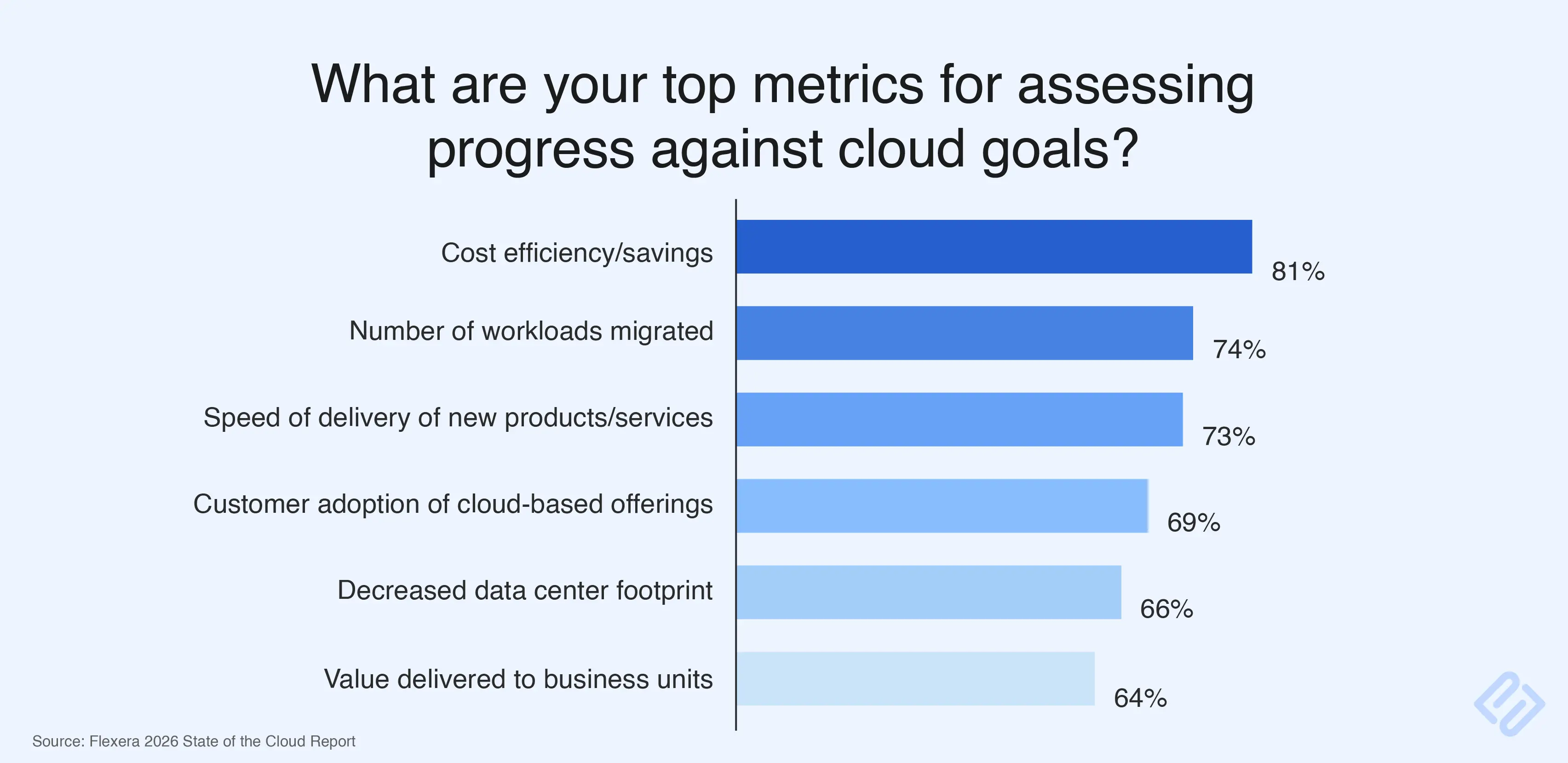
64% of organizations now measure cloud success by business value delivered
Cloud + AI is The New Operating System for Business
These days, AI leaders are adopting hybrid and multi‑cloud setups as their default way to run AI experiments or scale their existing systems. Instead of being an “optional IT,” they now see cloud as a core enabler of AI adoption.
Lately, IT budgets are also following a new trend. More and more spending is being pushed into AI projects, cloud platforms, and security. The growth of cloud is directly tied to AI, as AI programs require a massive and scalable infrastructure to work.
AI/ML integration and cloud migration are today the top priorities for CIOs planning to modernize. In fact, the cloud is the core component today that makes AI adoption possible.
The statistics hint at something important for leaders to notice. They point to a structural shift in how enterprises will operate.
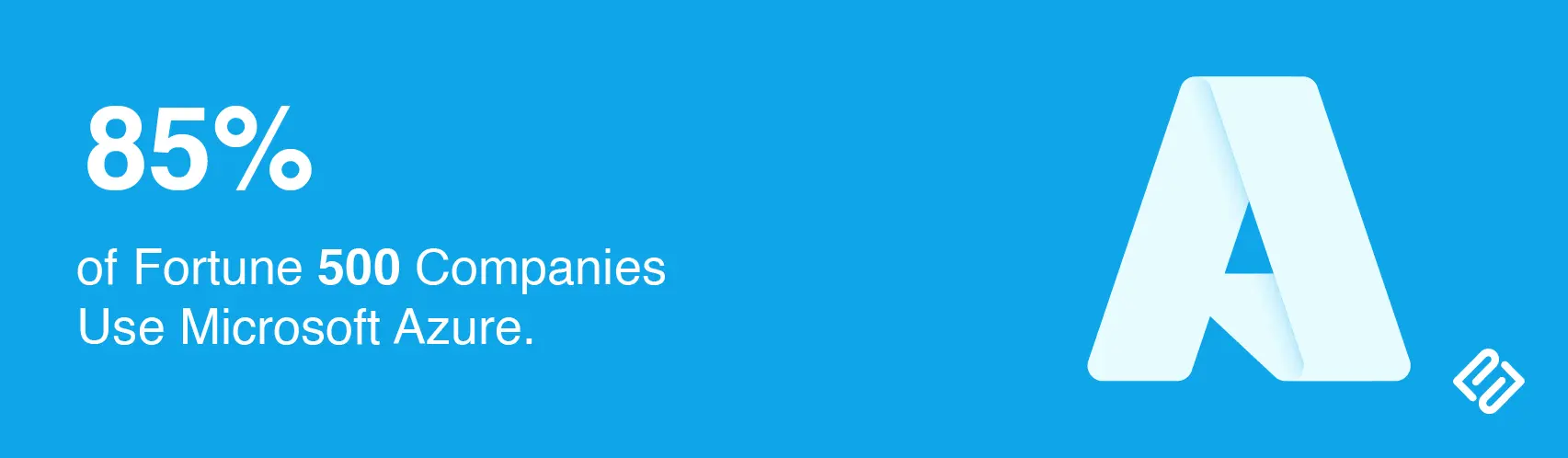
For the first time, organizations are measuring cloud success more by business value than cost savings. CEOs need to get behind hybrid strategies that keep things governed without slowing everything down. Cloud spending is heading past $1 trillion by 2027, with providers expected to earn $2 trillion in total. These aren’t IT line items anymore. They’re major capital decisions.
With over $75 billion in annual revenue and used by 85% of Fortune 500 companies, Azure has become a key part of enterprise technology. For businesses already using Microsoft products, Azure makes it easier to add AI to their main operations. Moving to the cloud can cut deployment time by 70%. In industries where being first to market matters, this gives companies a clear competitive edge.


Related Blogs
What Is Cloud-Native Architecture? Pros, Cons and Key Components
Explore practical insights from engineers who build scalable digital products every day.

Top Reasons To Hire A .NET Developer
Explore practical insights from engineers who build scalable digital products every day.

Top 9 Cloud Benefits: Productivity, Innovation & Growth
Explore practical insights from engineers who build scalable digital products every day.
Benefits of a Dedicated Development Team Model
Explore practical insights from engineers who build scalable digital products every day.
Top 12 Software Development Methodologies
Explore practical insights from engineers who build scalable digital products every day.
Why Cloud Integration Matters: Is Your Business Ready?
Explore practical insights from engineers who build scalable digital products every day.
.NET Core vs .NET Framework: Key Differences That Matter
Explore practical insights from engineers who build scalable digital products every day.

Why Is Azure DevOps the Key to Faster Business Growth Today?
Explore practical insights from engineers who build scalable digital products every day.
Azure DevOps Pipelines: Tools for Smoother Deployments
Explore practical insights from engineers who build scalable digital products every day.
On Premise vs Cloud Computing: Cost, Security & Scalability
Explore practical insights from engineers who build scalable digital products every day.